One Reader Writes…by D J "Duke" Dukesherer, Sr.
What is the history of racing in Westchester/Playa Del Rey?
Beginning with the building of the Los Angeles Coliseum Motordrome, the area is rich in racing history. The wood plank raceway built in 1909; was the first of its kind anywhere in the world; built right in the middle of the Ballona Wetlands. It was 1/3 mile long, and was the first board track built specifically for racing motorcycles. All motorcycle board races prior to this track were held on bicycle velodromes. Later, cars raced there also; driven by greats like Jimmy Murphy and Ralph De Palma. I have often written about the doomed, street car served raceway, which burned to the ground in 1931.
The entrance to the racetrack was located at where Jefferson and Culver Blvd’s converge.But of all the racing activity in the area, none was larger than the Mines Field Raceway. The massive race course and grounds, backed by oil magnate Earl Gilmore, covered a territory from about Arbor Vitae (continuing down to Wil Rogers St.) to Sepulveda; and between Century and Inglewood. The location had previously played host to the National Air Races and Aeronautical Exposition in 1928, and was visited by the Graf Zeppelin, and flying pioneer Charles Lindberg. To attend the Air Races, Amelia Earhart completed the west-bound leg of the first woman’s solo, U.S. transcontinental round trip; landing at Los Angeles.
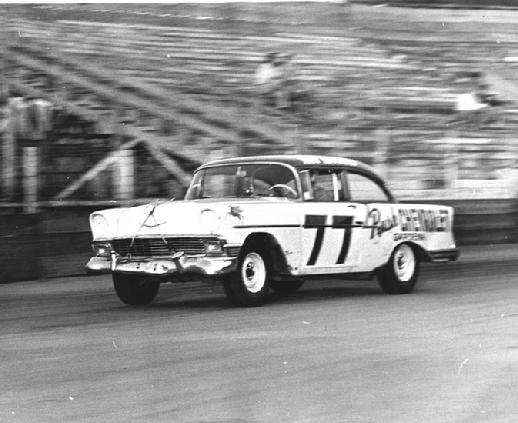
This 2 mile dirt course (it was never paved) drew crowds from everywhere, and the grand stands alone held 75,000 people. Local favorites such as Rex Mays, Kelly Petillo and Lou Moore raced here. The whole enterprise lasted only 4 years—1932 to 1936; but hundreds of thousands of spectators flocked there. On Oct. 25, 1936, African American race driver "Rajo" Jack drove a Ford stock car to victory in the 200-mile National Championship at the Mines Field Speedway. As segregation was still prevalent in the area, Jack, whose real name was Dewey Gaston, claimed he was Portuguese; to get around the race discrimination.
Mines Field Raceways’ B shaped 1.9 mile dirt road course was opened in 1932, and closed in 1936. A shorter 1.56 dirt road course was used in 1934, hosting an AAA champ car race. Much of the area is now LAX/Westchester. The National Champion racer: Rajo Jack, aka, Dewey Gaston (1905-1956). He also used the name Jack Desoto, alleging to be Portuguese, so he could stay with the white racers at motels across the country. He once let the other driver win in a two lap match race because he knew that he couldn't kiss the white trophy girl. This was long before the struggles of Rosa Parks or Jackie Robinson. He is buried in Lincoln Cemetery-Carson, CA.
Finally, street racing aficionados will remember that Westchester was the home of the last true hand built (modified) Ford Shelby Mustangs and Cobra Mustangs-all built by racing great Carol Shelby’s company at a then abandoned LAX aircraft hangar at 6501 Imperial Highway. I can remember these being "test driven" all over town. The first Ford Mustangs were introduced at the New York World's Fair on April 17, 1964 to rave reviews. Shelby began modifying them shortly thereafter.
Carol Shelby, at his Venice, CA shop in an AC Cobra, 1963. Left, at LAX, a ’65 Shelby Mustang GT; the engine was a modified K-code 289ci Windsor V8 with special "Cobra" valve covers, tri-Y headers, a special intake manifold and Holley carburetor increased power from 271 to 325 hp. All cars were painted "Wimbledon White".
Moving his plant, only a few years before from 1042 Princeton Drive in Venice, and at the urging of Lee Iacocca, Shelby began production of the hugely successful Shelby Mustangs in 1964. He continued to build the cars in Westchester until LAX evicted him in 1966. You can view a classic TV commercial of the Mustangs being driven along the LAX runway at http://youtube.com/watch?v=fYD8w-nP89s-The Theme Building is in the background. From there, the cars were made at a Ford plant in Michigan; basically becoming a production car. In 2006 Ford introduced the new Shelby Mustang; made in Las Vegas, NV.
Two large aircraft hangers were leased from North American Aviation at LAX in Westchester on January 1, 1965 for $8,800.00 per month. Shelby American, Inc., sold the new Shelby Mustang GT350 for about $4500.00. My grandfather, William "Lloyd" Thompson, retired Ford Motor Company employee/ Detroit, MI, worked at the plant.But not even a plaque or memorial reminds of us of these racing pioneers and locations-- born along, and forgotten near, the bluffs and foggy dunes of Westchester/Playa Del Rey.
Please email comments to: dukehometownnews@yahoo.com
|